
In short: The Galleria Vittorio Emanuele II grew out of Milan’s plans to rebuild the area around its cathedral after independence from Austria in 1859. Giuseppe Mengoni won the third design competition in 1863, the king laid the first stone on 7 March 1865, the arcade opened on 15 September 1867 and the entrance arch on 24 February 1878. Bombs destroyed the roof in 1943, and it reopened in 1955.
This timeline follows the Galleria from its planning to the present. The building’s main restoration campaigns have their own article, restoring the Galleria, and its architect has a profile, Giuseppe Mengoni. Most dates below come from Italian Wikipedia, which gives the most detailed account; where English Wikipedia differs we say so.
Two terms are useful. The Risorgimento is the nineteenth-century movement that unified Italy. A passage, as the French called it, is a covered shopping street lit from above, the model Milan wanted to follow and outdo.
Why did Milan build the Galleria?
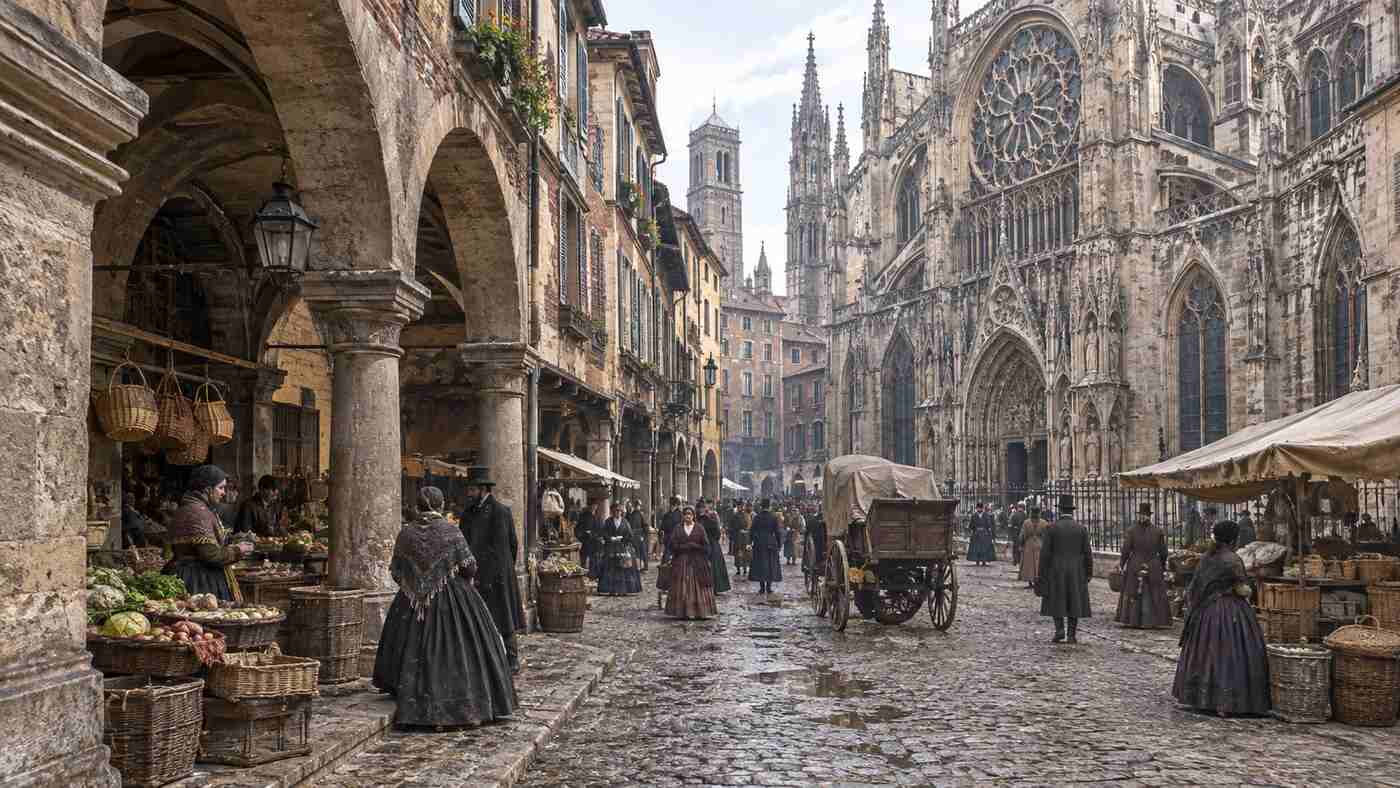
Before the Galleria, the square in front of the cathedral was smaller and irregular, surrounded by twisting medieval streets. Italian Wikipedia records that the writer Carlo Cattaneo started a public debate about rebuilding the area in 1839. Milan already had one covered passage, the Galleria De Cristoforis, inspired by the Galerie Vivienne in Paris and the Burlington Arcade in London, and for thirty years it was the city’s only one.
Independence changed the politics. After the Second War of Italian Independence in 1859 Lombardy joined the Kingdom of Sardinia, the core of the future Italy. Dedicating a new street to King Victor Emmanuel II expressed the city’s enthusiasm for independence. Italian Wikipedia adds that the council also hoped the royal name would make it easier to win permission to expropriate the buildings in the way. Three royal decrees signed in 1859 and 1860 allowed the expropriations, the demolition of old buildings including the Coperto dei Figini, and a lottery to raise money.
The competitions of 1860 to 1863
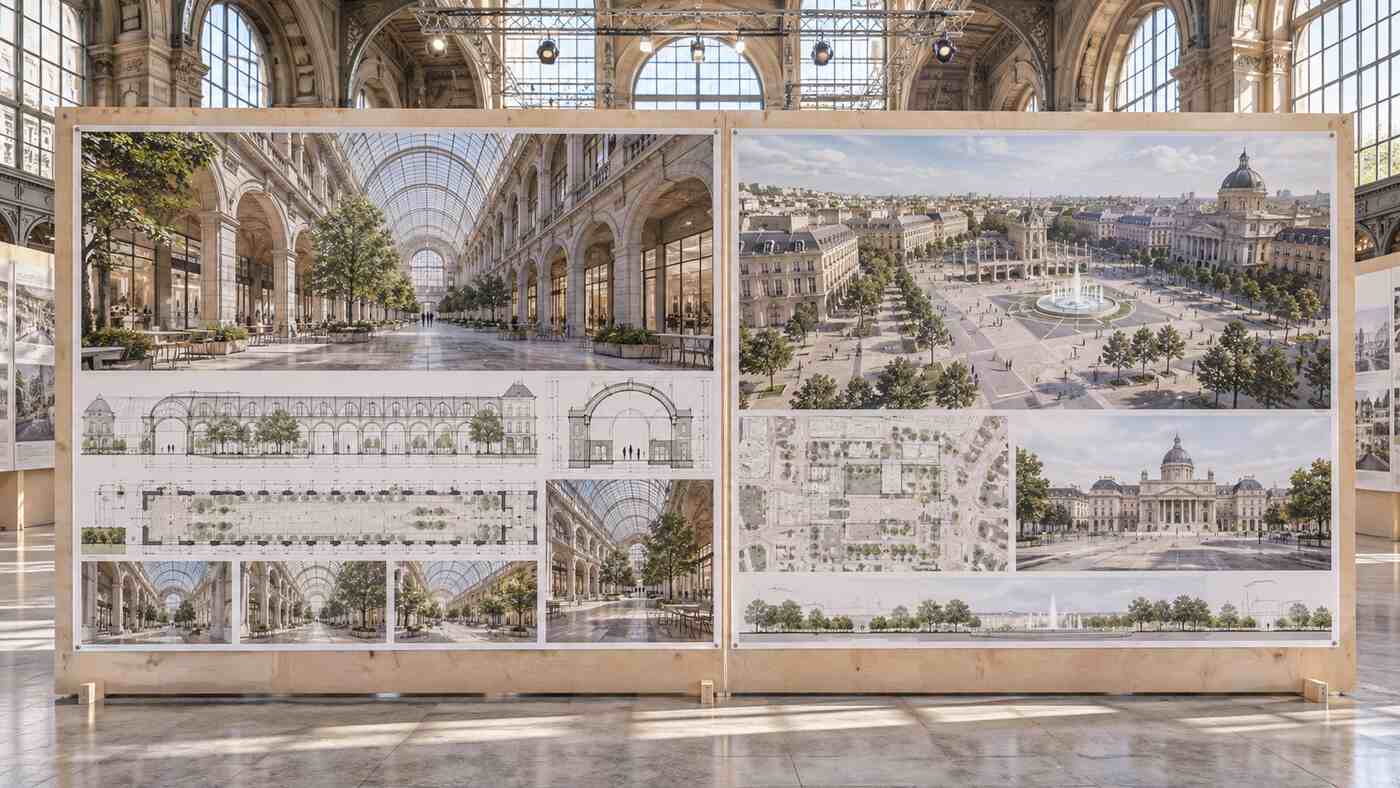
The City of Milan opened the first design competition on 3 April 1860. Of the many entries, 176 were selected and shown at the Pinacoteca di Brera, but no winner was named. The jury refined the brief, introducing the idea of a covered passage, and a second competition followed in February 1861. Eighteen designs reached the jury, again with no winner.
The third and final competition, in 1863, judged eight projects. Mengoni won on condition that he revise some parts, and his single gallery became the cross-shaped plan built today. English Wikipedia’s page on Mengoni notes that the decision was controversial, with Milanese professional circles criticising the excessive grandeur the scheme gave the cathedral square. The plan also included a Palazzo dell’Indipendenza facing the cathedral and a royal loggia, neither of which was built.
Construction and opening, 1865 to 1878
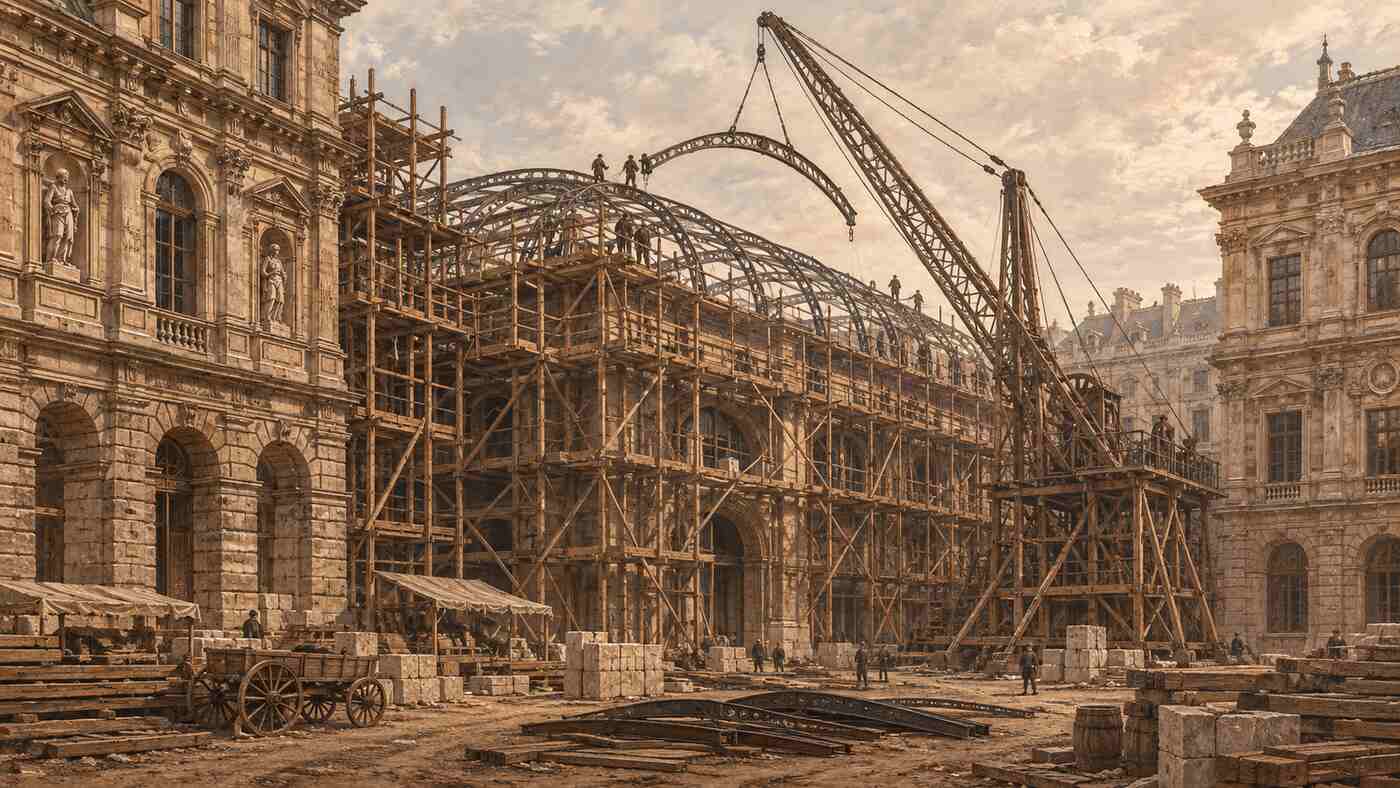
The contract went to an English company, the City of Milan Improvements Company Limited. Victor Emmanuel II laid the first stone on 7 March 1865, in the presence of the mayor Antonio Beretta and the prime minister Alfonso La Marmora. Work, except for the triumphal arch, took less than three years, and the king inaugurated the Galleria on 15 September 1867.
The company went bankrupt in 1869, and the city bought the Galleria for 7.6 million lire. Italian Wikipedia puts the total cost at 30 million lire of the time. The entrance arch and the northern porticoes of Piazza del Duomo were completed in 1878, and the arch was inaugurated on 24 February 1878. Mengoni did not see it. He fell from the scaffolding during an inspection on 30 December 1877. English Wikipedia uses 1877 as the opening year and 1865 to 1877 as the building period.
The first decades
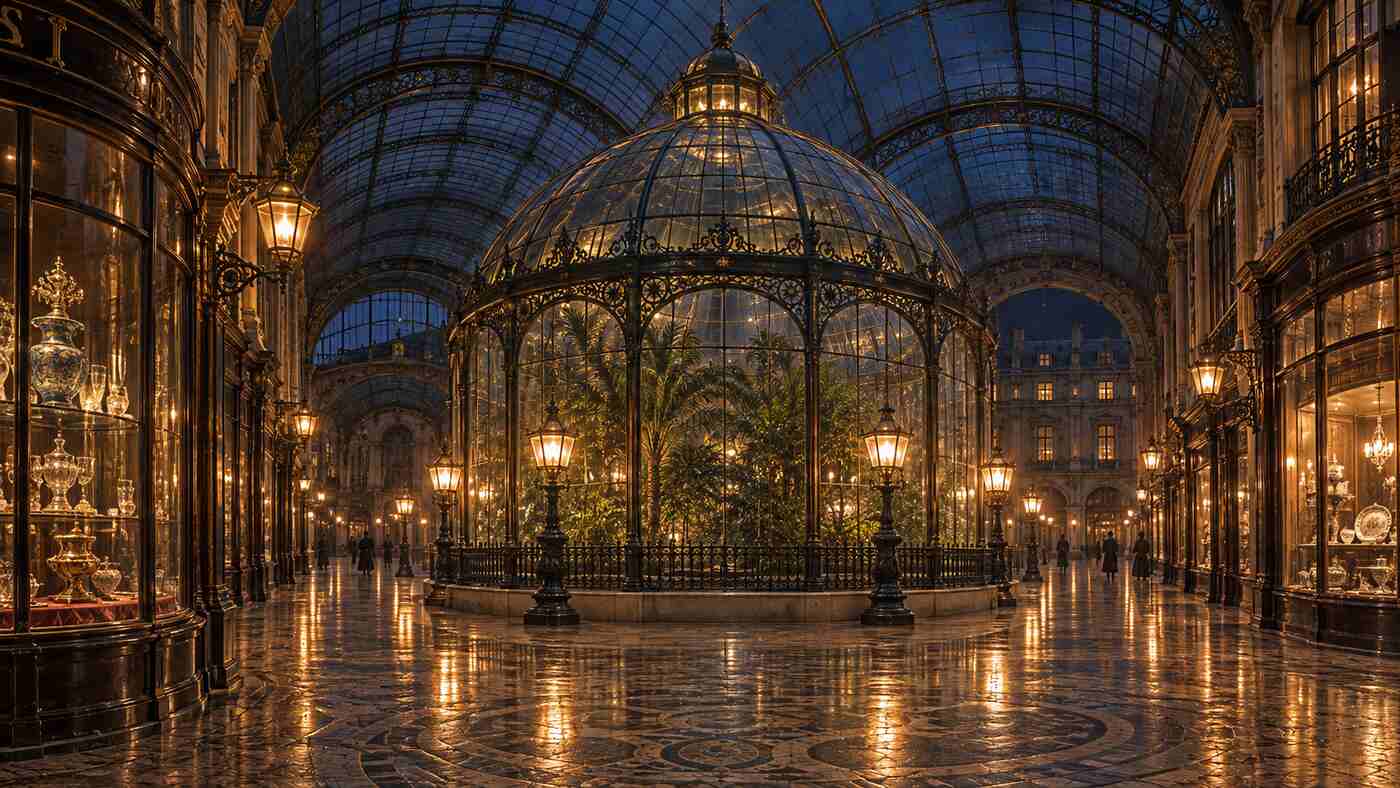
The Galleria was first lit by gas. Italian Wikipedia describes the rattìn, Milanese for “little mouse”, a small automatic engine that ran around the octagon lighting the lamps in turn, and says watching it became a ritual. Electric lighting replaced gas in 1883. A hailstorm on 13 June 1874 caused the worst damage to the roof before the Second World War.
The arcade quickly became a stage for politics. On 25 September 1867, ten days after the opening, young people protested there against the arrest of Giuseppe Garibaldi. Clashes followed on 1 May 1890 and during the Milan riots of 1898. Singers and musicians gathered there looking for work in Lombardy’s theatres. In the early 1900s Marinetti and the Futurists met in the Galleria, and Boccioni painted Rissa in galleria in 1910. Giovanni Verga set several stories there, including one about a street coffee seller who spends her nights under the arch.
War, rebuilding and the centenary
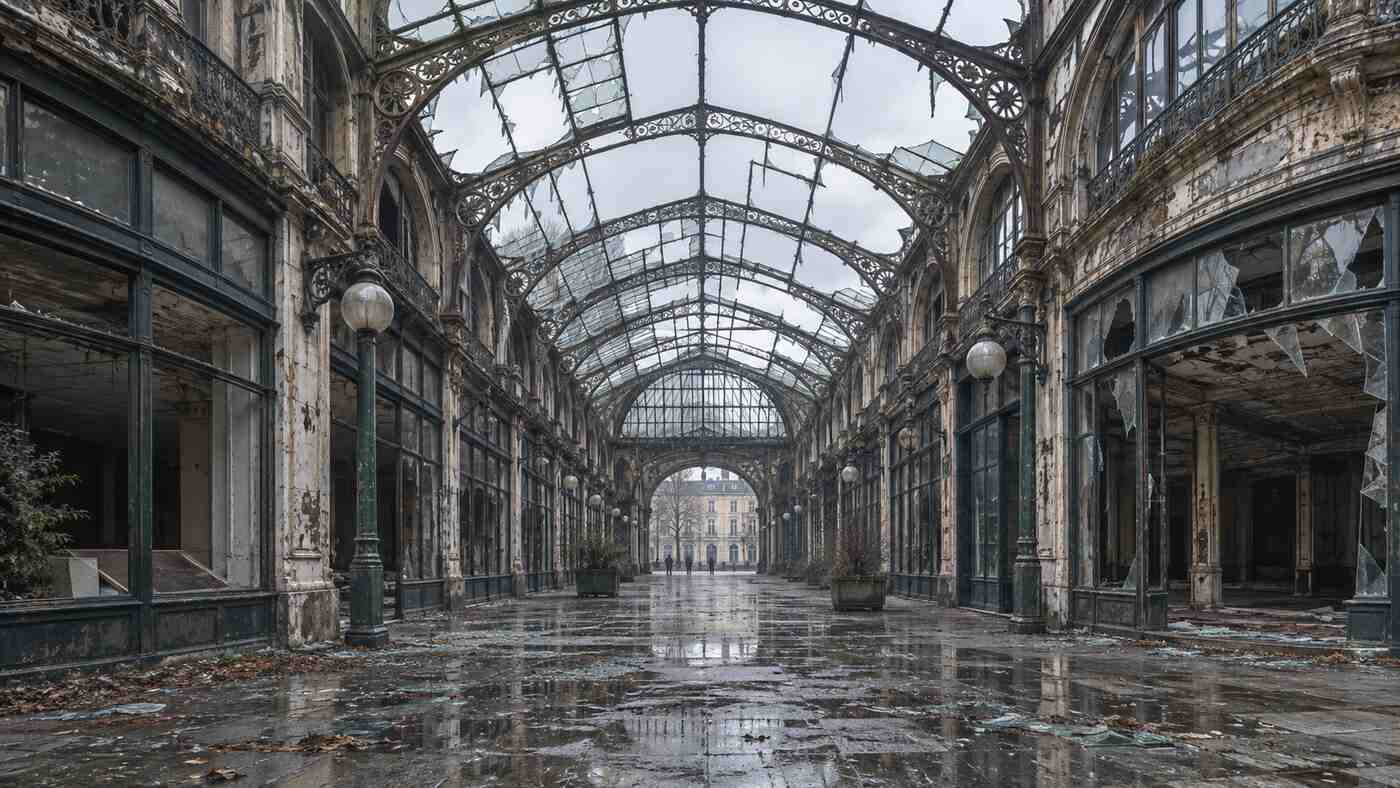
Allied bombing on 15 and 16 August 1943 destroyed the glass roof and part of the iron frame and damaged the decoration inside. Rebuilding plans only began in 1948, two years after La Scala had been rebuilt, partly because of debates about how to restore it. Proposals included a roof in glass blocks and replacing the coloured stucco with Vicenza stone. The heritage superintendency chose the project closest to the original.
The restoration finished in 1955, and the second inauguration took place on 7 December, the feast of Milan’s patron saint Ambrose and the opening night of La Scala. For the centenary in 1967 the floor and mosaics, roughly patched after the bombing, were relaid. Our article on the Galleria’s decoration explains what was replaced.
The Galleria today
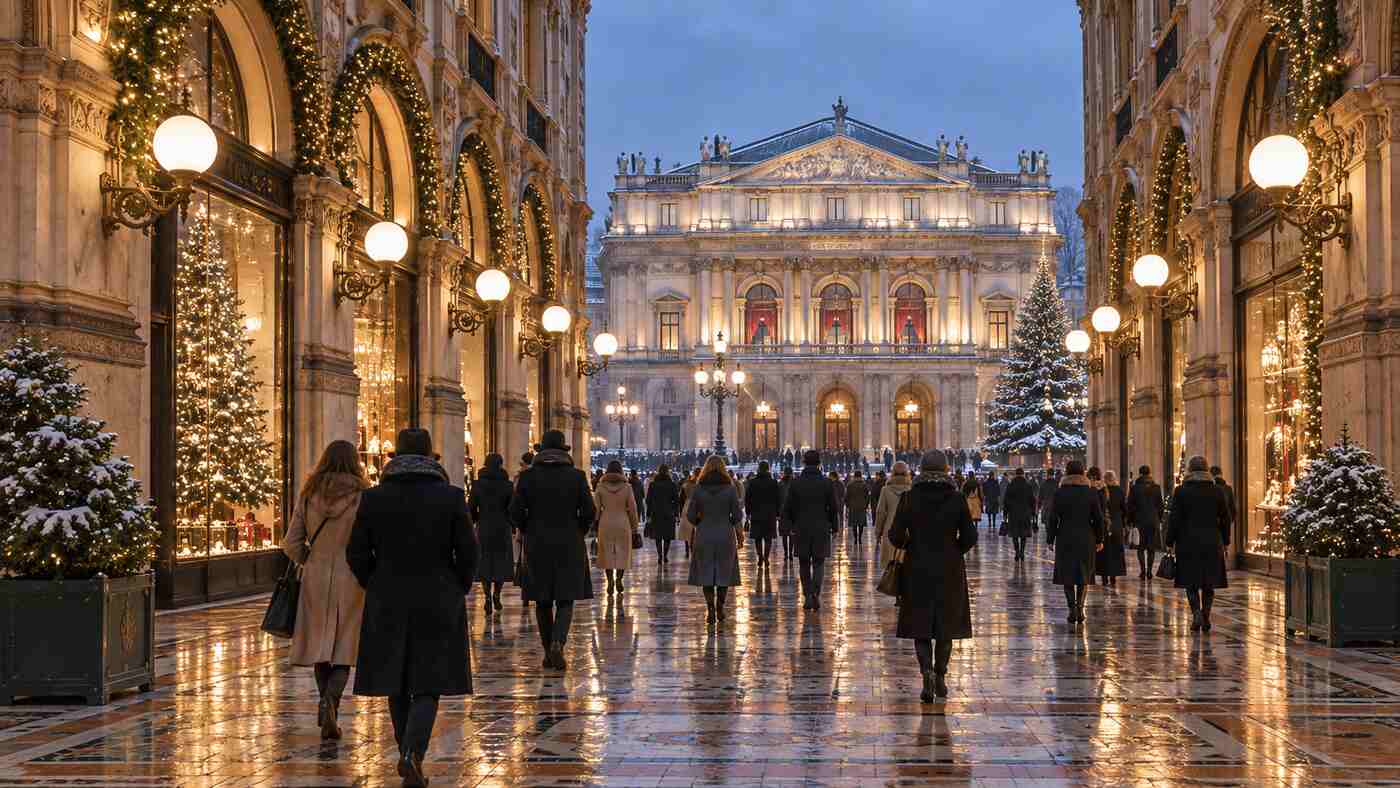
From March 2014 to April 2015 the Galleria had its deepest restoration since the war, ahead of Expo 2015. In September 2021 the city let several spaces by tender, and in March 2024 it began two new projects worth about one million euros on a façade and on roofs. In November 2026 the BBC reported a fresh repair of the bull mosaic in the octagon. The building that Mengoni’s critics found too grand now appears on most first visits to Milan; our visitor guide covers what to see.
Key takeaways
- The Galleria was conceived after Lombardy’s independence from Austria in 1859 and named after the first king of Italy.
- Three competitions ran from 1860 to 1863; Mengoni won the last.
- The first stone was laid on 7 March 1865, the arcade opened on 15 September 1867 and the arch on 24 February 1878.
- The contractor failed in 1869 and the city bought the building for 7.6 million lire.
- Bombs destroyed the roof in August 1943; the Galleria reopened on 7 December 1955.
Common questions
When did the Galleria open?
King Victor Emmanuel II inaugurated the Galleria on 15 September 1867. The triumphal arch facing the cathedral was inaugurated later, on 24 February 1878. English Wikipedia uses 1877, the year the scheme was finished, as its opening date.
Who paid for the Galleria?
The City of Milan commissioned it and contracted the City of Milan Improvements Company Limited, an English firm, to build it. A lottery helped raise money. The firm went bankrupt in 1869, and the city bought the Galleria for 7.6 million lire.
How did Mengoni die?
He fell from scaffolding during an inspection of the works on 30 December 1877, shortly before the arch was completed. Italian Wikipedia notes rumours that it was suicide, but the sources we used do not confirm them.
Was the Galleria damaged in the Second World War?
Yes. Allied bombing on 15 and 16 August 1943 destroyed the glass roof and part of the iron frame. Rebuilding began in 1948 and finished in 1955, following the original design.
Why was the second opening on 7 December?
7 December is the feast of Saint Ambrose, Milan’s patron saint, and the traditional opening night of the season at La Scala, the opera house at the other end of the Galleria.
How we put this together: this timeline follows Italian Wikipedia’s detailed history of the Galleria and checks it against English Wikipedia, English Wikipedia’s page on Giuseppe Mengoni, the Treccani encyclopedia entry on Mengoni, the City of Milan’s 2021 and 2024 announcements and the BBC’s 2026 report. Where sources differ on dates we give both.
Sources
- Wikipedia (Italian), Galleria Vittorio Emanuele II
- Wikipedia, Galleria Vittorio Emanuele II
- Wikipedia, Giuseppe Mengoni
- Treccani, Enciclopedia Italiana, Giuseppe Mengoni (1934)
- City of Milan, new assignments for spaces in the Galleria (2021)
- City of Milan, two restoration projects worth one million euros (2024)
- BBC News, Milan restores bull mosaic (2026)